AI + Environment Summit
Wed. September 30th, 2026
A full-day summit to inspire, ignite and innovate work in AI for the environment
The AI + Environment Summit brings together researchers, industry leaders, and policymakers to explore how artificial intelligence can drive positive environmental change. From cutting-edge research to real-world applications, the summit offers inspiring talks, panel discussions, and networking opportunities. Don’t miss the chance to be part of the conversation shaping the future of AI for a sustainable planet!
Event Schedule
8:30
Arrival & Welcome Coffee
9:15
Introduction by the Organizing Committee
9:30
Keynote Talk: Prof. Stefano Mintchev (University of Bonn)
10:15
Keynote Talk: Prof. Pierre Gentine (Columbia University)
11:00
Coffee break
11:30
Parallel Sessions: Weather & Climate | Drones
13:00
Lunch
14:30
Afternoon Session: AI Hype or Real Impact?
15:30
Coffee break
16:00
Poster session & Startup booths
17:00
Apero

Robots Searching for Life Beyond Sight, Sound, and Reach
Prof. Stefano Mintchev is a roboticist working at the interface between robotics and environmental science. His research focuses on robust, scalable, and bioinspired robotic technologies that can access complex natural environments and collect environmental information beyond the limits of human observation. He earned his Ph.D. in Bioinspired Robotics from Scuola Superiore Sant’Anna in Italy in 2014, followed by postdoctoral research at EPFL on bioinspired aerial robots. In 2018, he co-founded Foldaway Haptics and served as CTO until 2020. He subsequently joined ETH Zurich as Assistant Professor of Environmental Robotics. In October 2026, he will join the University of Bonn as Professor of Agricultural Robotics, with a research focus on sustainability, precision agriculture, and robotic technologies for environmental monitoring.
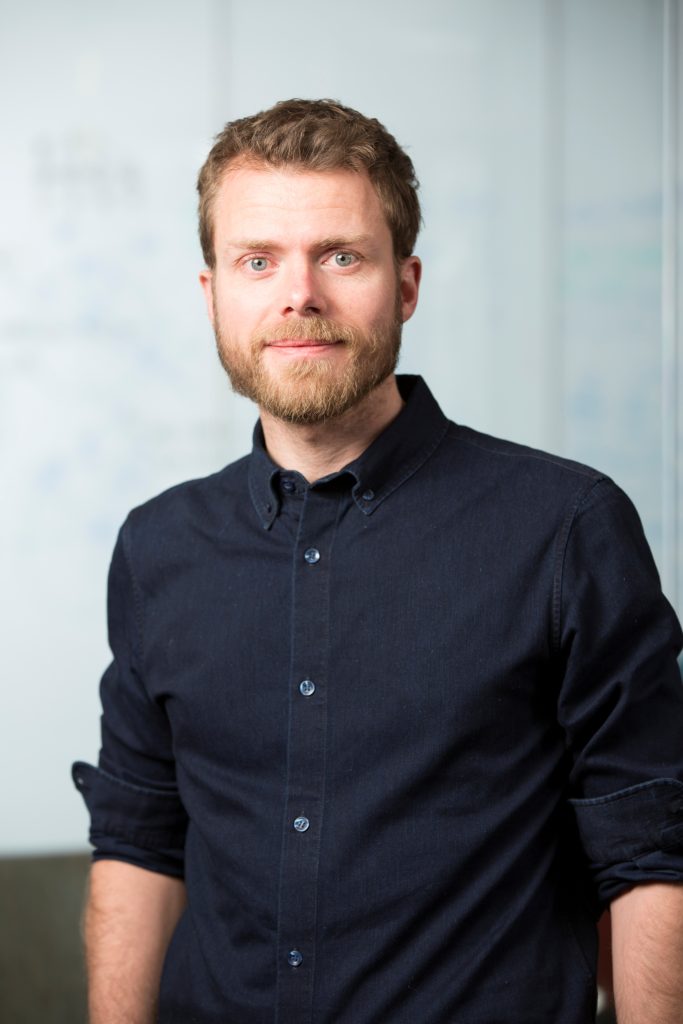
Lost (and Found) in Latent Land
How latent spaces can improve our prediction and understanding of weather and climate
Prof. Pierre Gentine is a professor at the Department of Applied Mathematics and Applied Physics at Columbia Engineering since 2010. He received numerous prices and early career awards, including the NASA, DOE, and NSF Early Career Awards, as well as the American Geophysical Union Macelwane medal. His recent work spans improving the representation of clouds in climate models, improving simulations with measurement data (data assimilation), and differentiable solvers for fluid dynamics. He is also co-founder of Celest.Science.
AI for Weather and Climate Modeling
Modeling Earth’s weather and climate remains one of the grand challenges in science. It is a problem that spans scales from local thunderstorms to global ocean currents, from tomorrow’s forecast to projections centuries ahead. Getting this right has never been more urgent: our ability to anticipate, adapt to, and act on a changing climate depends on it. AI is now making a significant impact on this field. From AI weather forecasting that rivals traditional numerical models to efficient climate model components that enhance long-range projections, the pace of progress has been remarkable.
Join us to explore this exciting area: What can AI models already deliver? Which open problems remain? And what does it take to build weather and climate models we can trust?
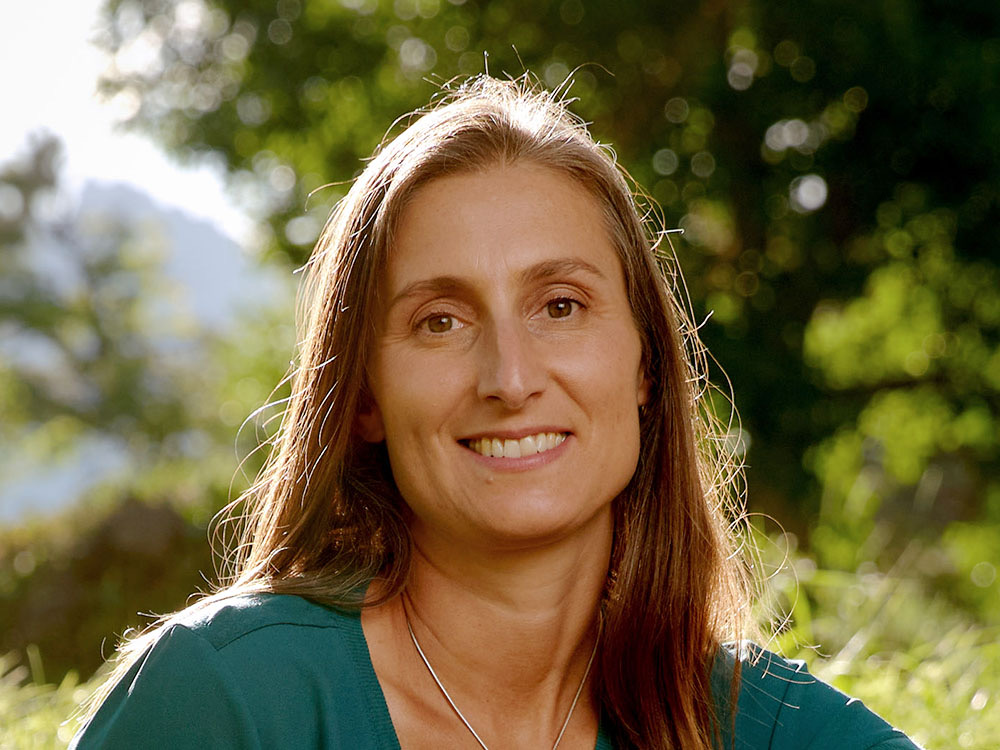
Prof. Claire Monteleoni
Research Director at INRIA Paris
Professor at the University of Colorado Boulder
AI Research for Climate Change and Environmental Sustainability
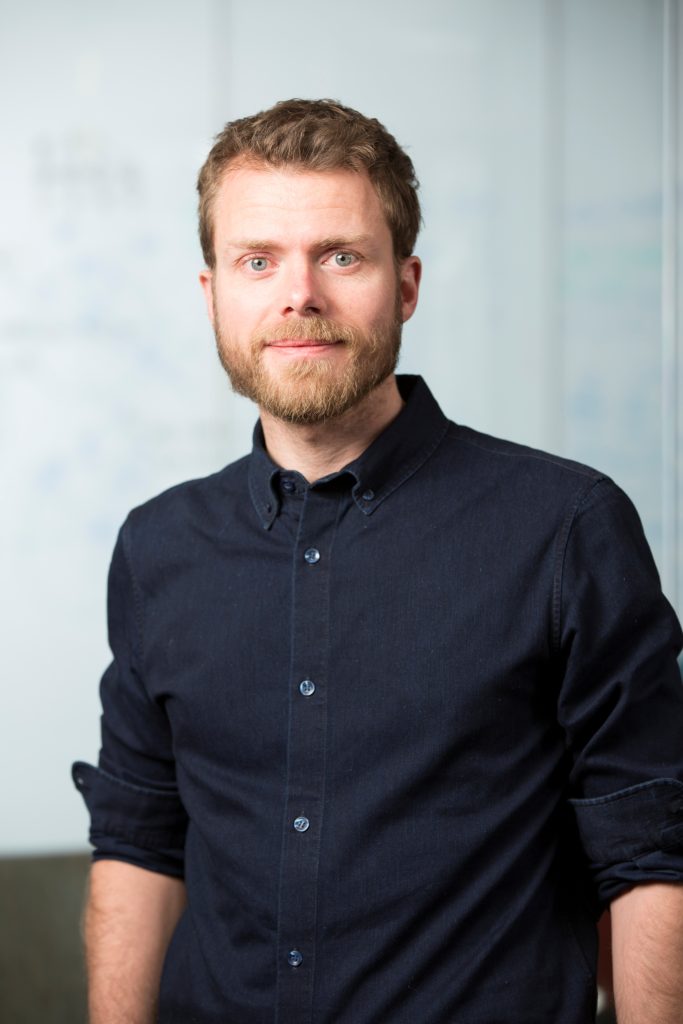
Prof. Pierre Gentine
Professor at Columbia University
Keynote speaker
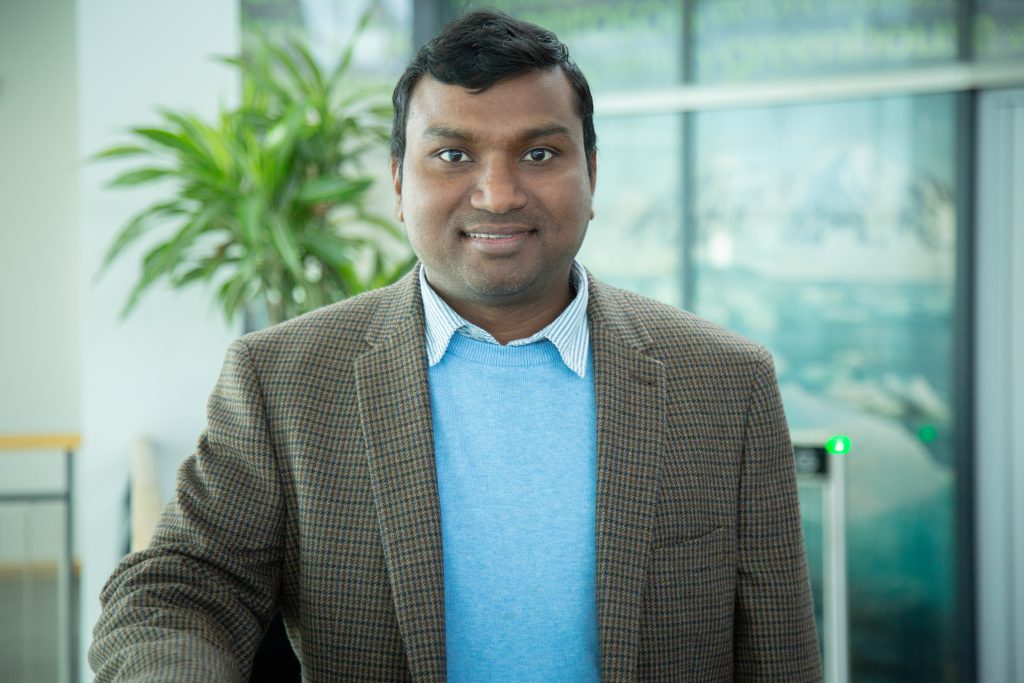
Dr. Seshagirirao Kolusu
Scientific Manager at the Met Office Hadley Centre, UK
Artificial Intelligence for Weather and Climate Intelligence: Opportunities and Challenges
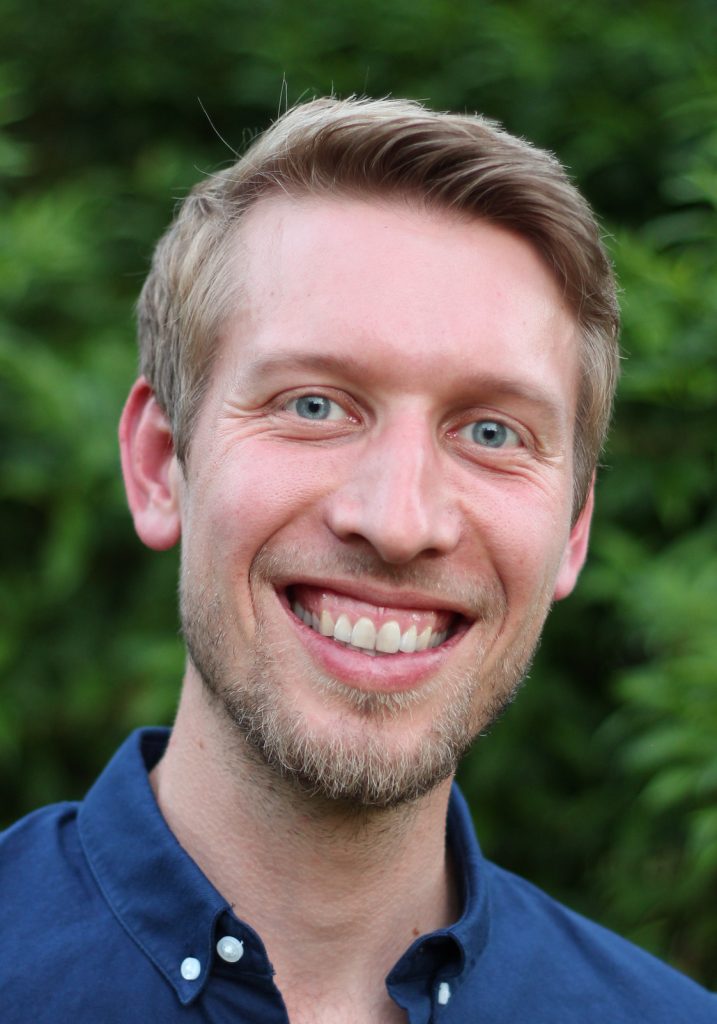
Prof. Sebastian Engelke
Professor at the University of Geneva
AI for Weather and Climate Modeling
Dr. Peter Ukkonen
Postdoc at the University of Oxford
Machine learning to improve (not replace) climate modeling
PARALLEL SESSION
Drone Applications for Environmental Monitoring and Conservation
nmanned aerial systems are rapidly becoming a cornerstone technology in environmental science, offering scalable, high-resolution, and cost-effective methods for observing and understanding complex ecological systems. This session explores the state of the art and emerging frontiers of drone-based environmental applications, spanning biodiversity conservation, ecosystem monitoring, and environmental impact assessment. The discussion will focus on three interconnected themes:

Prof. Emily Lines
Associate Professor at the University of Cambridge
Monitoring forests from above – what do we see and what do we miss?
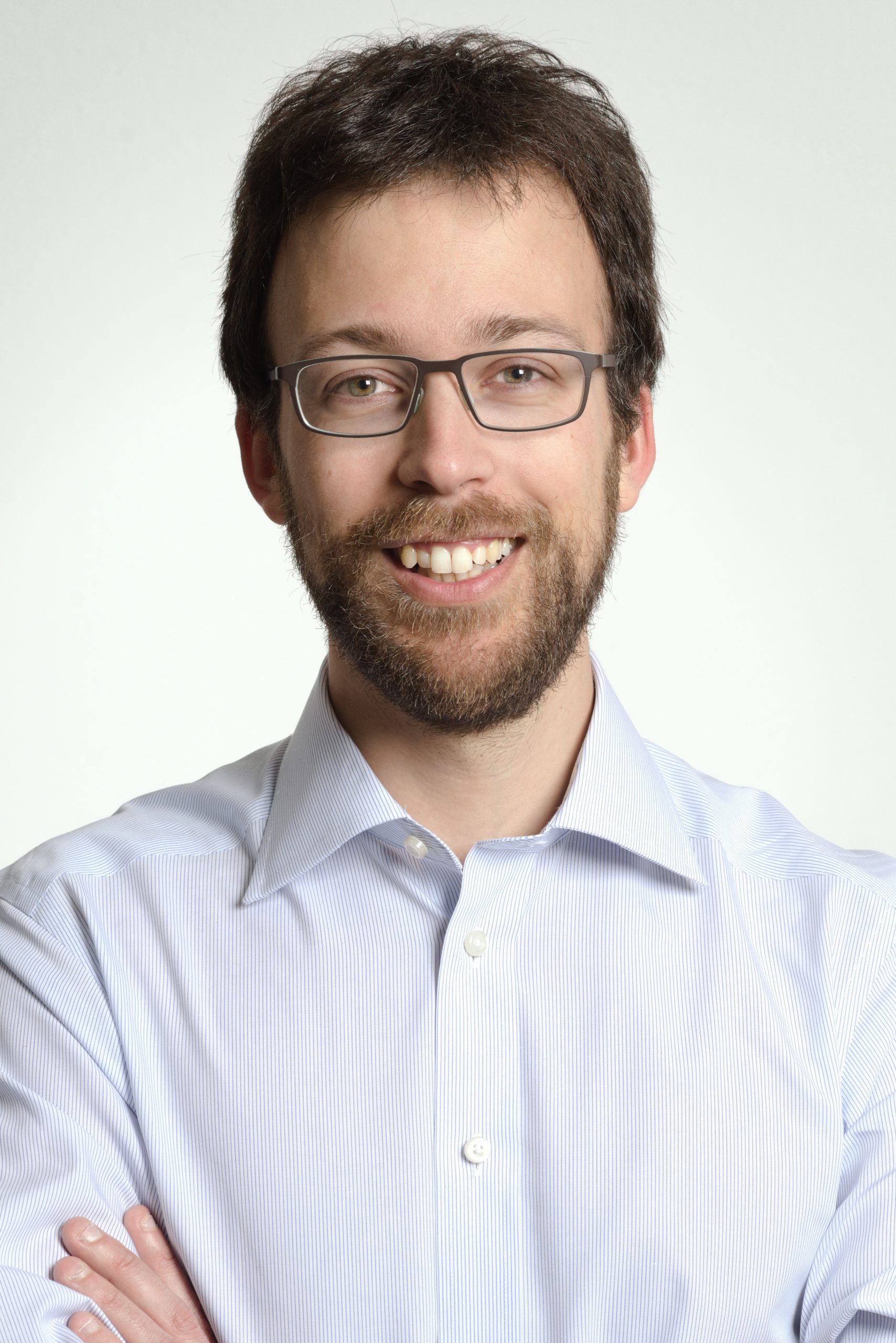
Prof. Stefano Mintchev
Incoming Professor at the University of Bonn
Keynote speaker
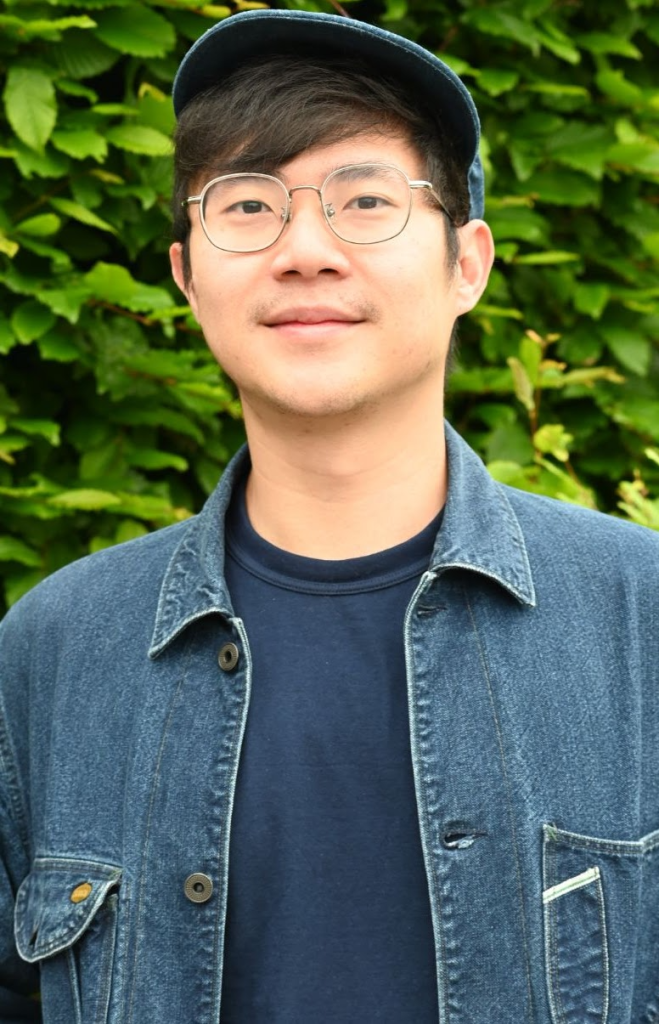
Dr. Pham Huy Nguyen
Research Scientist at EMPA
Soft Sustainability Robotics for Multimodal Environmental Monitoring
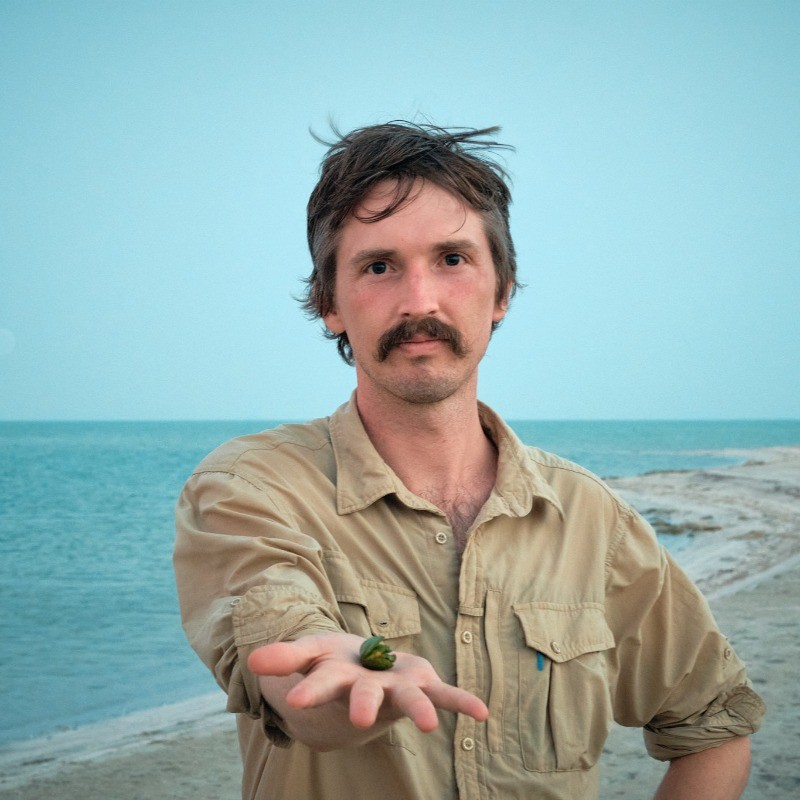
Cameron Dowd
CTO and Co-Founder of Inverto Earth
Drones for nature restoration
AI Hype or Real Impact? The Future of AI+Environment
As AI advances rapidly—with foundation models, multimodal systems, and generative AI reshaping both research and real-world applications—we want to explore what these developments mean for fields at the intersection of AI and the environment. Environmental challenges such as climate forecasting, biodiversity monitoring, and conservation decision-making place distinct demands on AI: limited and biased data, multimodal sensing, uncertainty estimation, interpretability, models that generalize appropriately while remaining reliable under local conditions, and reliable deployment under urgent real-world constraints.
This panel will explore a key question: How are current AI trends changing application-driven research in environmental fields—and are they accelerating real impact, or pulling attention away from what these domains actually need? We will bring together diverse perspectives on where AI is genuinely transformative, where the hype exceeds the utility, and what the next generation of environmentally relevant AI should look like.

Prof. Emily Lines
Associate Professor at the University of Cambridge
Forest Ecology, Remote Sensing, LiDAR Data
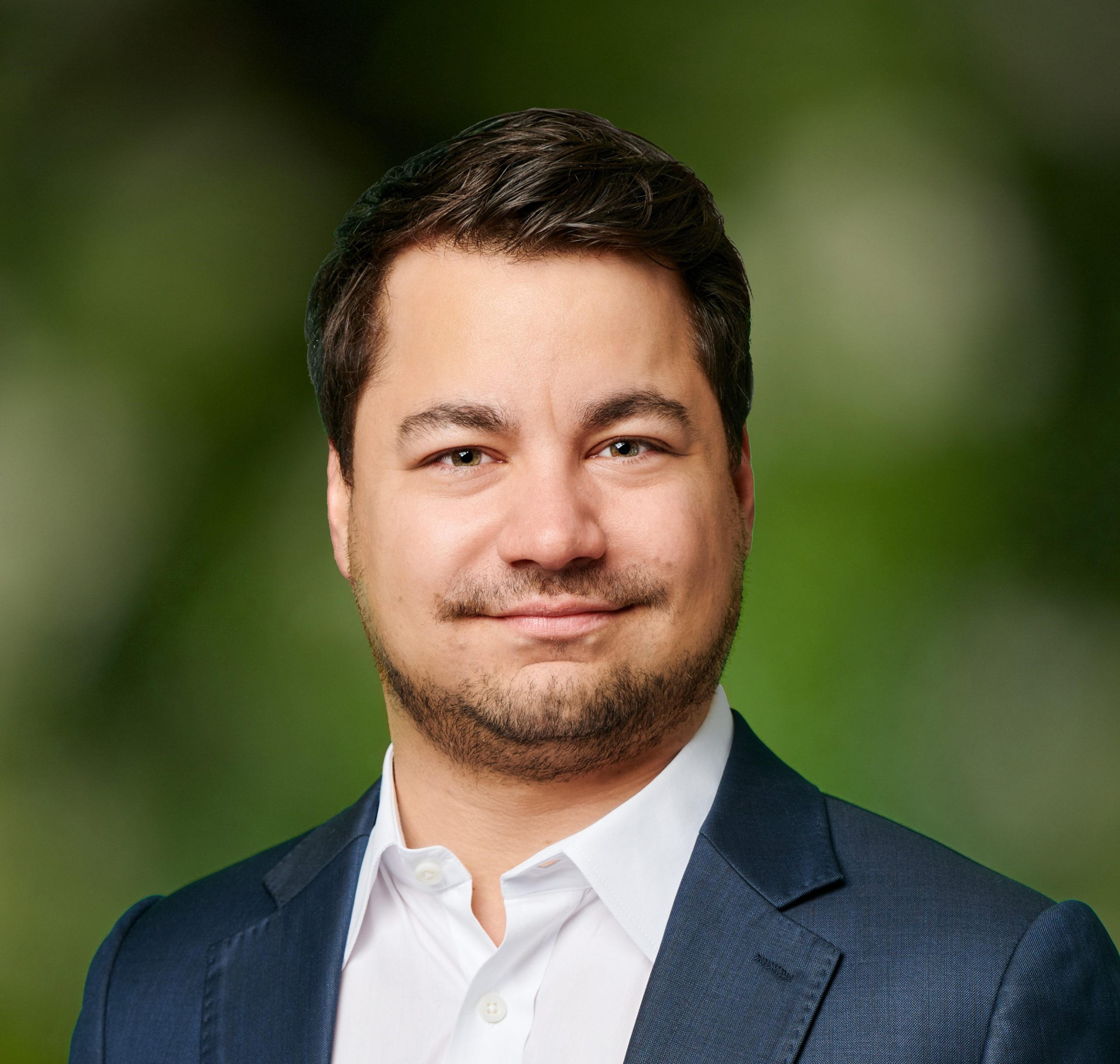
Attila Steinegger
Digital Transformation Lead at WWF
Nature Conservation, Biodiversity Monitoring
Prof. Claire Monteleoni
Research Director at INRIA Paris, Prof. at the University of Colorado Boulder
Climate Informatics, AI/Machine Learning
Dr. Konstantin Klemmer
AI Research Engineer at LGND AI, Incoming Assistant Professor at UCL
Geospatial Phenomena, Urban Environments
Posters
- “Causal Machine Learning Reveals Convective Organization Biases in Km-Scale Models”, Dié Wang
- “Greening AI or AI’s Greenwashing? A Net Impact Assessment Framework for Environmental Sustainability”, Yash Saxena
- “Global patterns of mycorrhizal plant species richness”, Qian Li
- “Do Neural Networks Attend to Morphological Characters? Explainable AI for Small-Data Intraspecific Zooplankton Classification”, Valeriya Kirova
- “FLUXtrapolation: A benchmark on extrapolating ecosystem fluxes”, Anya Fries
- “GNN-VIEW: Visual Inspection and Explanation of GNN-based Weather Model”, Alessandro Lucatelli
- “Deep learning-based monitoring of tree phenology from webcam and weather data”, Valerio Schelbert
- “Learning Spatial Ecological Networks from Geolocated Molecular and Earth Observation Data”, Victor Boussange
- “Where There’s Smoke: Wildfire Localization and Response from a Single Camera via Terrain and Depth Estimation”, Julian Gonzalez Artero
- “High-resolution probabilistic mapping of heat hazard events to guide urban planning”, Svea Krikau
- “Simulating riverine heatwaves with LSTMs”, Corinna Frank
- “Integrating GNSS-Derived Zenith Wet Delay into a Weather Foundation Model Improves Precipitation Forecasting”, Leonardo Trentini
- “Exploring Adversarial Attacks in AI Weather Models for Generation of High-resolution Tropical Cyclones”, Marco Froelich
- “Observation Assimilation Transformer – Probabilistic Weather Analysis from Sparse Station Observations”, Christian Donner
- “AgroScan – An Interactive SOC Prediction Tool for Farmers”, Margarete Breitenhuber, Clara Buller, Claudio Bussinger, Jerome Reiter
- “Making the most of AI in Spatial Data: Designing a Platform for and with Decision-Makers”, Annina Brügger
- “Interactive Generative Modelling for Safe and Sustainable by Design Chemicals”, Franziska Weissbach
- “Climate adaptation’s missing map: generating cadastral parcels from building footprints”, Leonard Schrage
- “A kilometer-scale machine learning weather forecasting emulator for the Alpine region”, Luca Lanzilao
- “Prompting-MammAlps: Fine-grained Text-to-Video Retrieval for Camera-trap Data”, Valentin Gabeff
- “Summer heat, winter floods: voice-first AI advice for climate-resilient building in Cape Town’s informal settlements”, Leonard Schrage
- “Rare weather event sampling using learning-assisted search”, Till Wenke
- “AareML: Predicting River Dissolved Oxygen in Swiss Alpine Catchments Using Seq2Seq LSTM”, Nikolayeva Tatyana Olga
- “National-scale Tree Species Mapping in Switzerland using Multi-Modal Remote Sensing Data”, Yixin Zhou
- “From benchmarks to forests – Lowering the barrier to deploying tree crown detection”, Felix Hammer
- “Tigers in the City: Investigating Associations Between Urban Green-Space Type and Asian Tiger Mosquito Abundance”, Charles Hatfield
- “deadtrees.earth-aerial: A Multi-Resolution Aerial Image Dataset for Tree Cover and Mortality Detection”, Ayushi Sharma
- “Elephant Zzz’s for Zookeepers: An AI Dashboard for Asian Elephant Welfare Monitoring”, Leyla Davis
- “The City as a Sensor: Three Months of Air-Quality Data from Winterthur’s Trolley Bus Fleet”, Markus Leutwyler
Please fill in the details about your poster below. The deadline for poster submission is August 1st 14th. Confirmation on accepted posters will be sent by August 25th.
Start-Up Booths





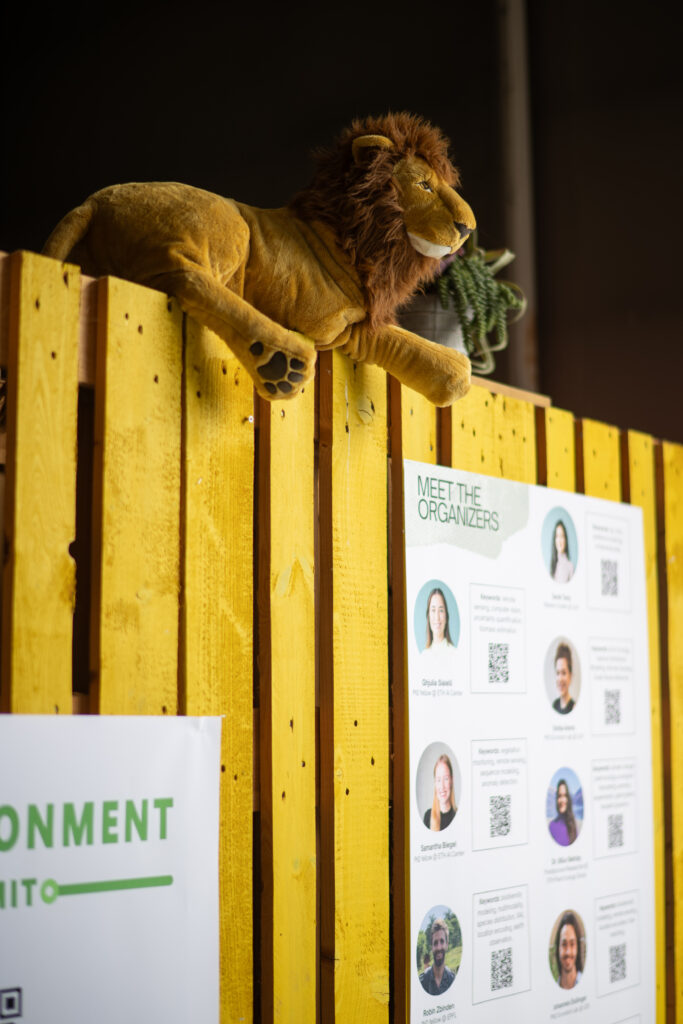
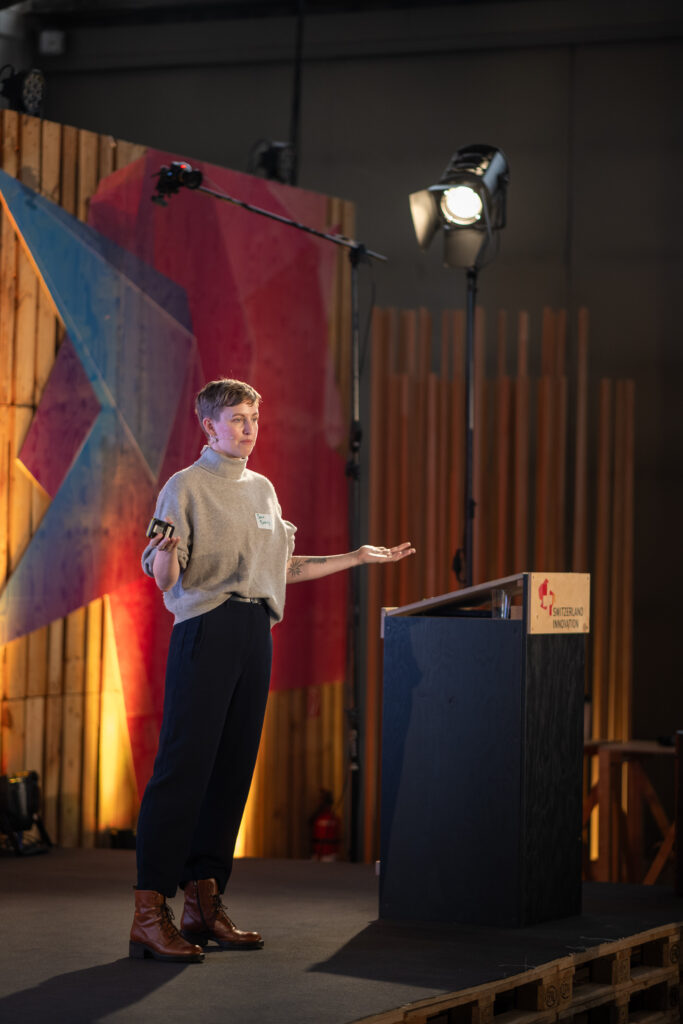
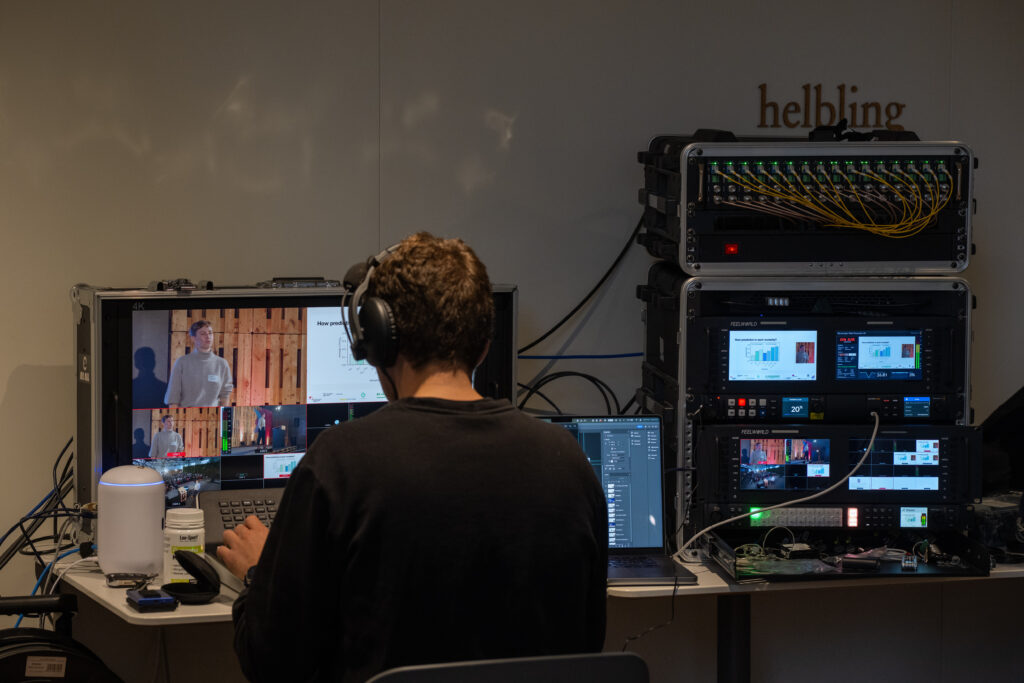
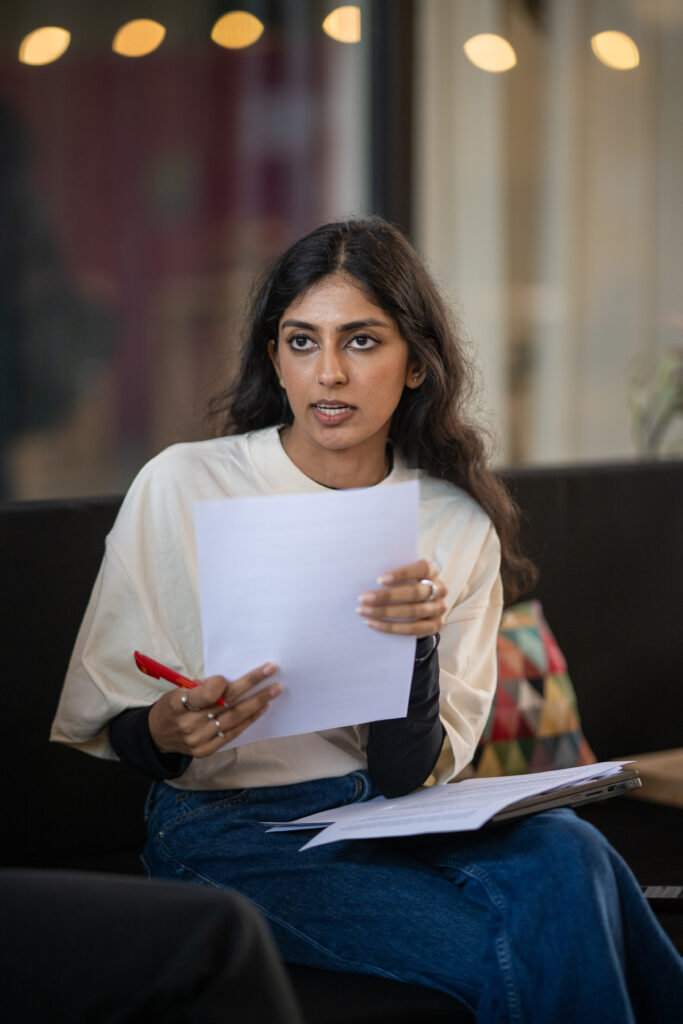
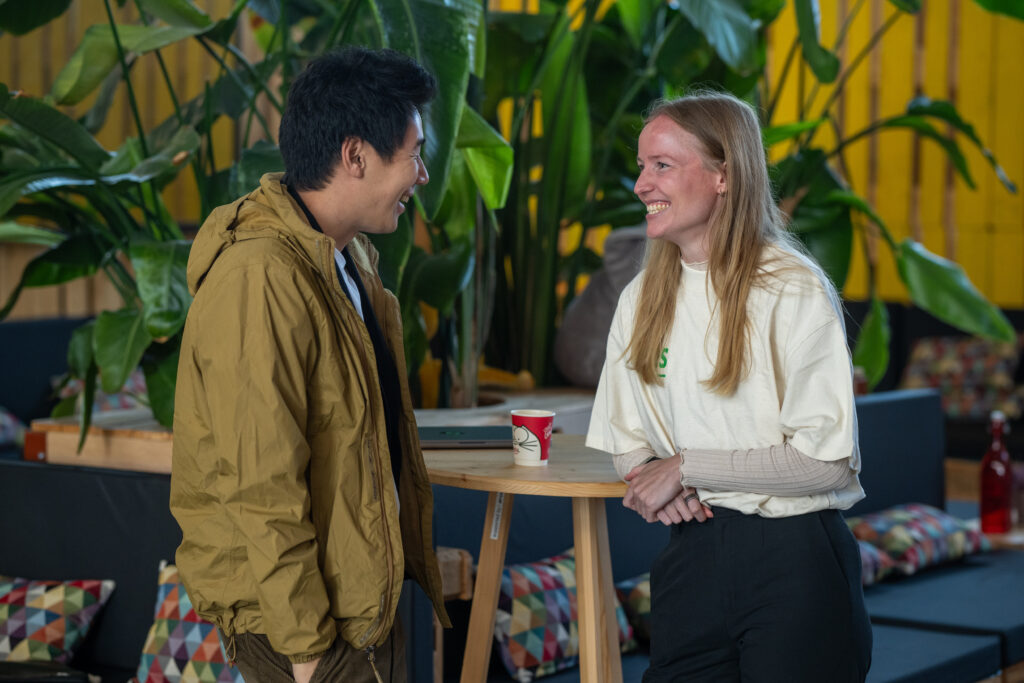
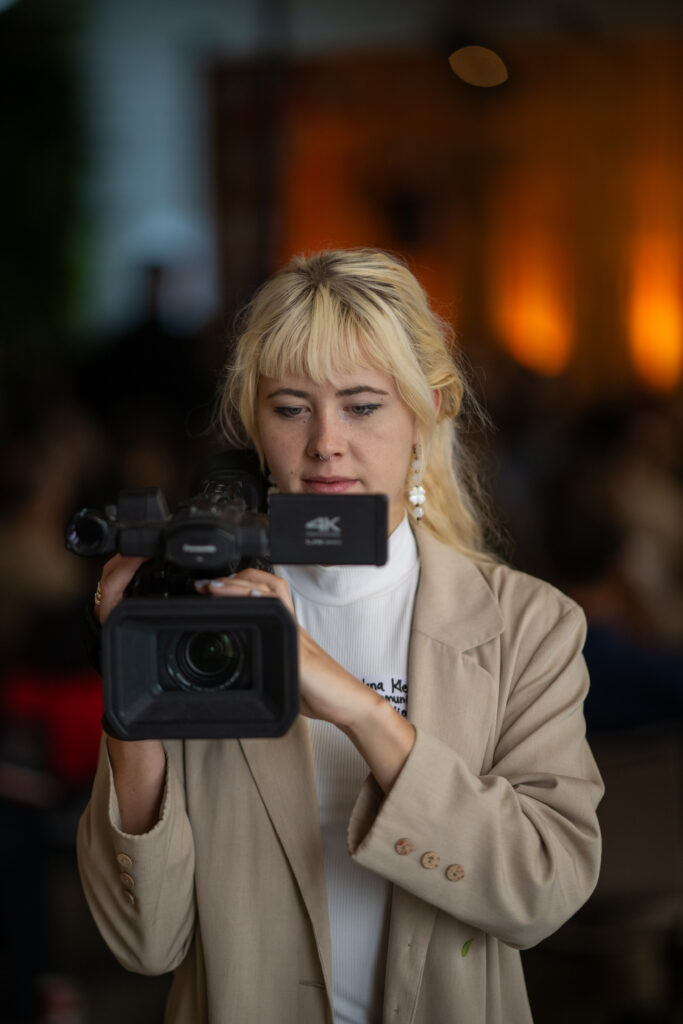
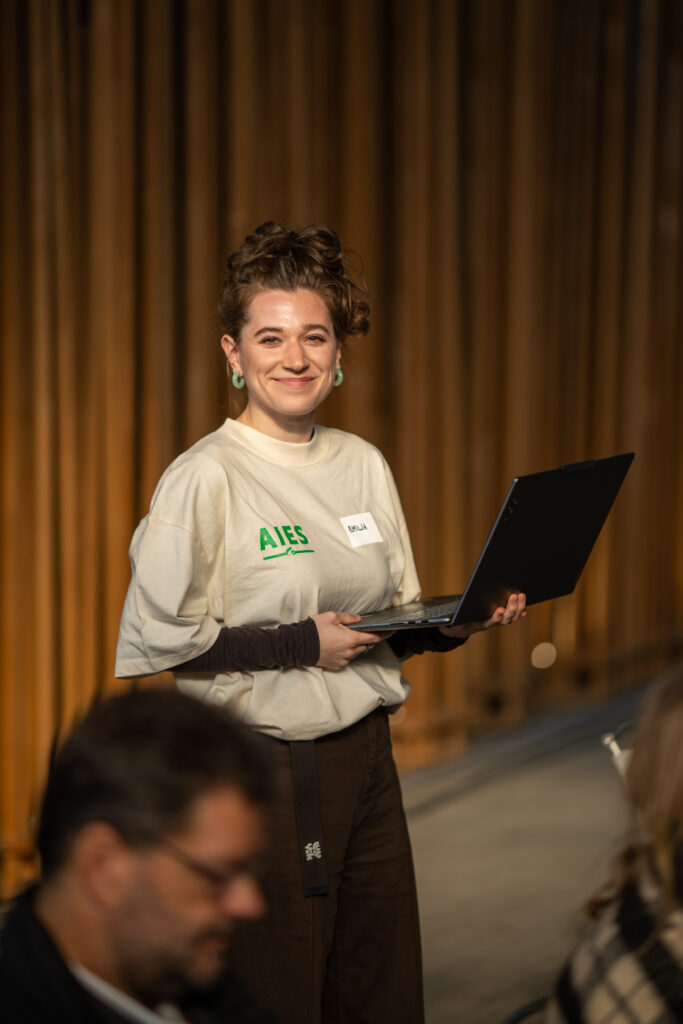
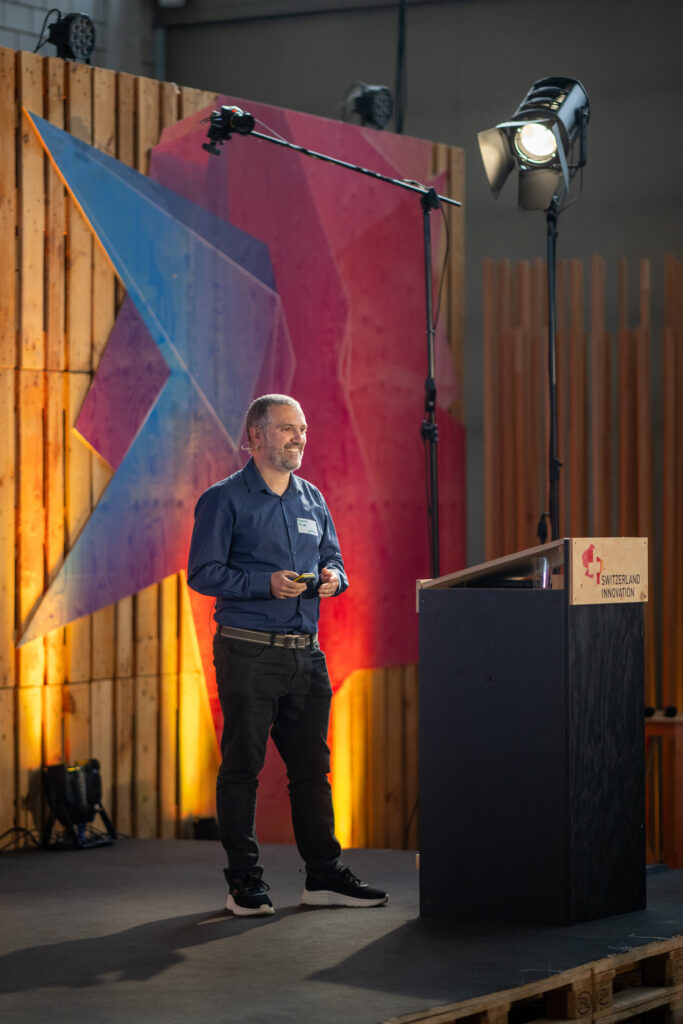
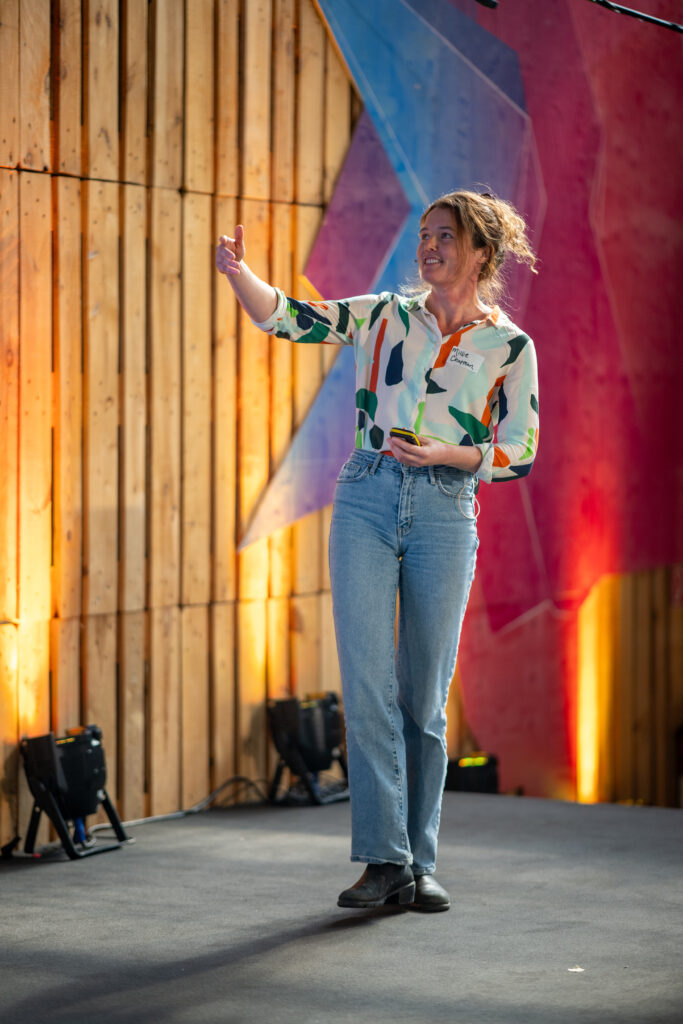
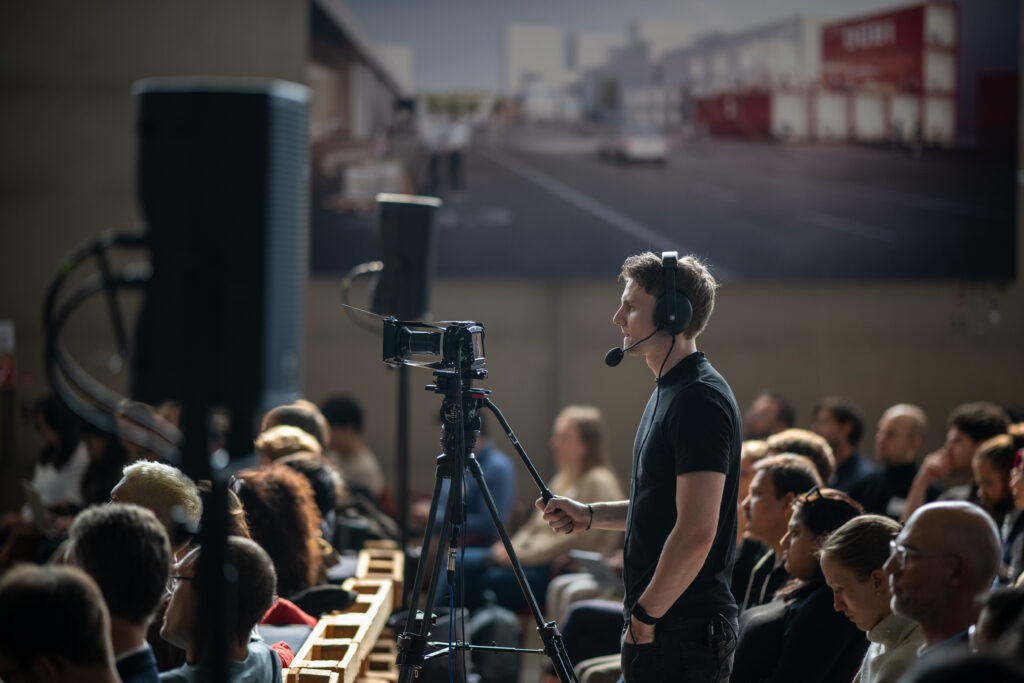
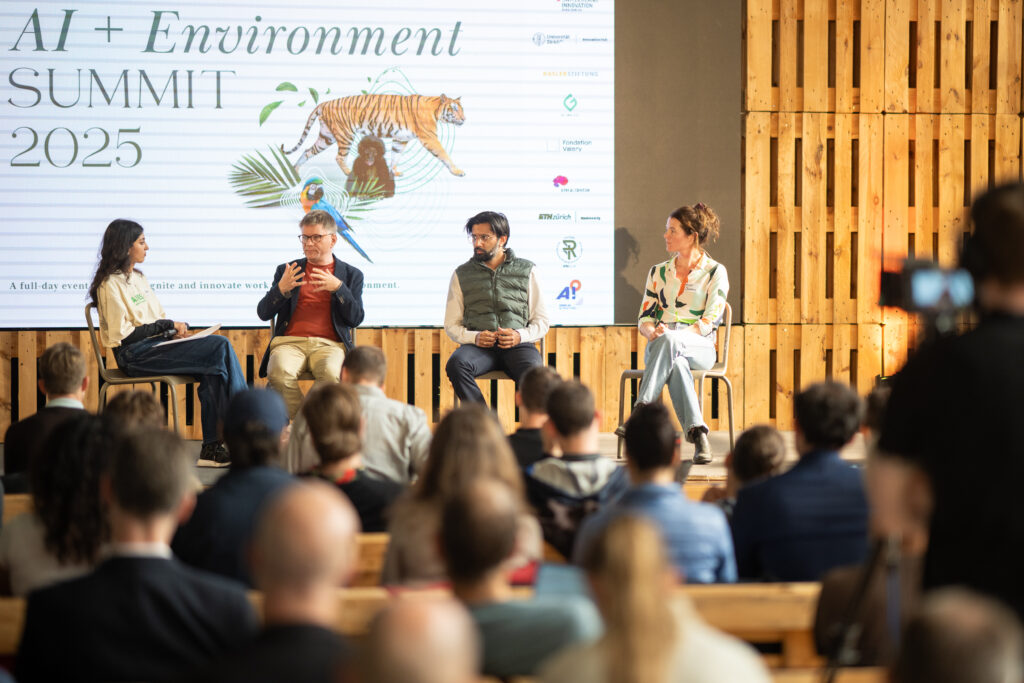
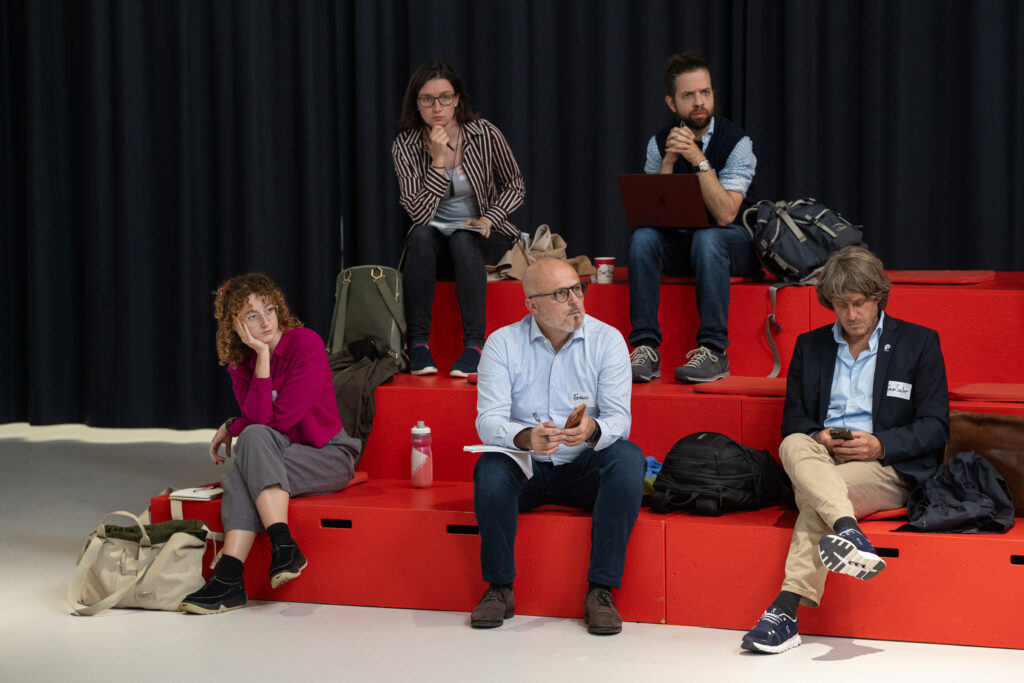
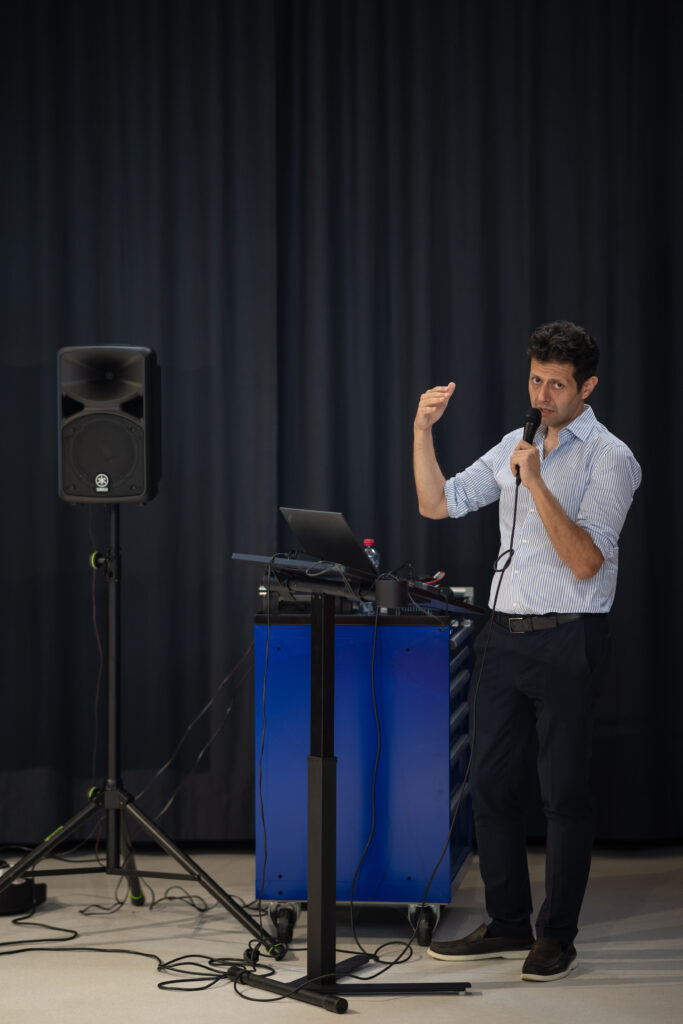
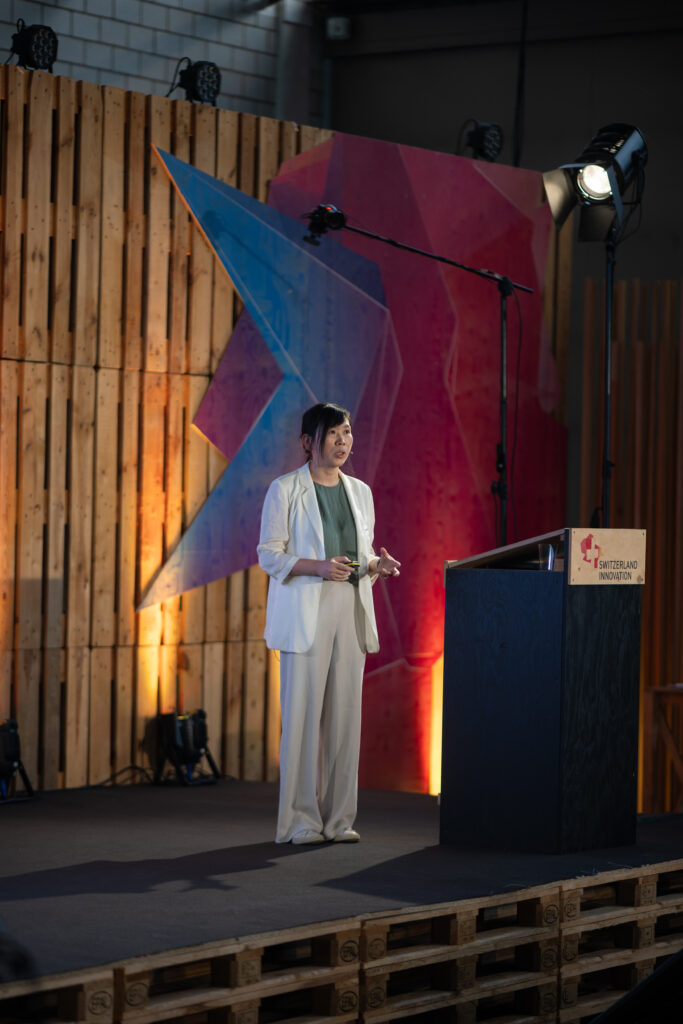
Impressions from the 2025 summit
You can find recordings of most talks on Youtube! The links are available in the session descriptions above, next to the speakers’ name.
Also take a look at the 2024 edition!

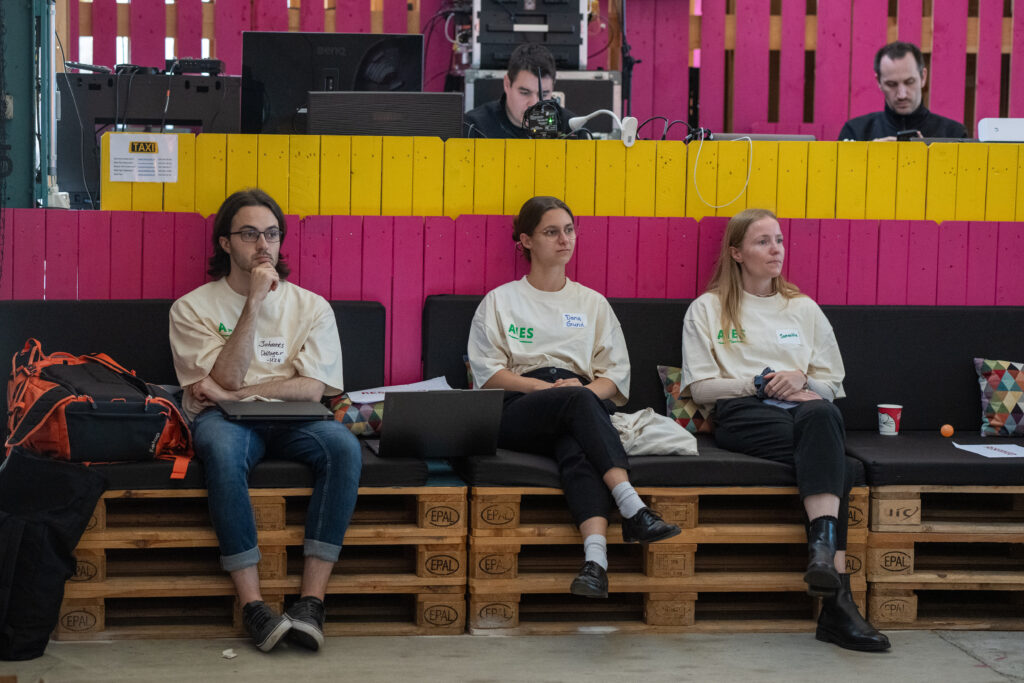
Venue — Innovation Park Zürich
Innovationspark Zürich
Wangenstrasse 68
8600 Duebendorf
Contact
If you would like to receive information about the AI + Environment Summit 2026, you can register using the form below. Do not hesitate to contact us at contact@aiesummit.com for any questions.
Organizers

Ghjulia Sialelli
PhD fellow at ETH AI Center

Samantha Biegel
PhD fellow at ETH AI Center

Sarah Tariq
Research Assistant at D-GESS, ETH

Emilia Arens
PhD Ecovision Lab at UZH
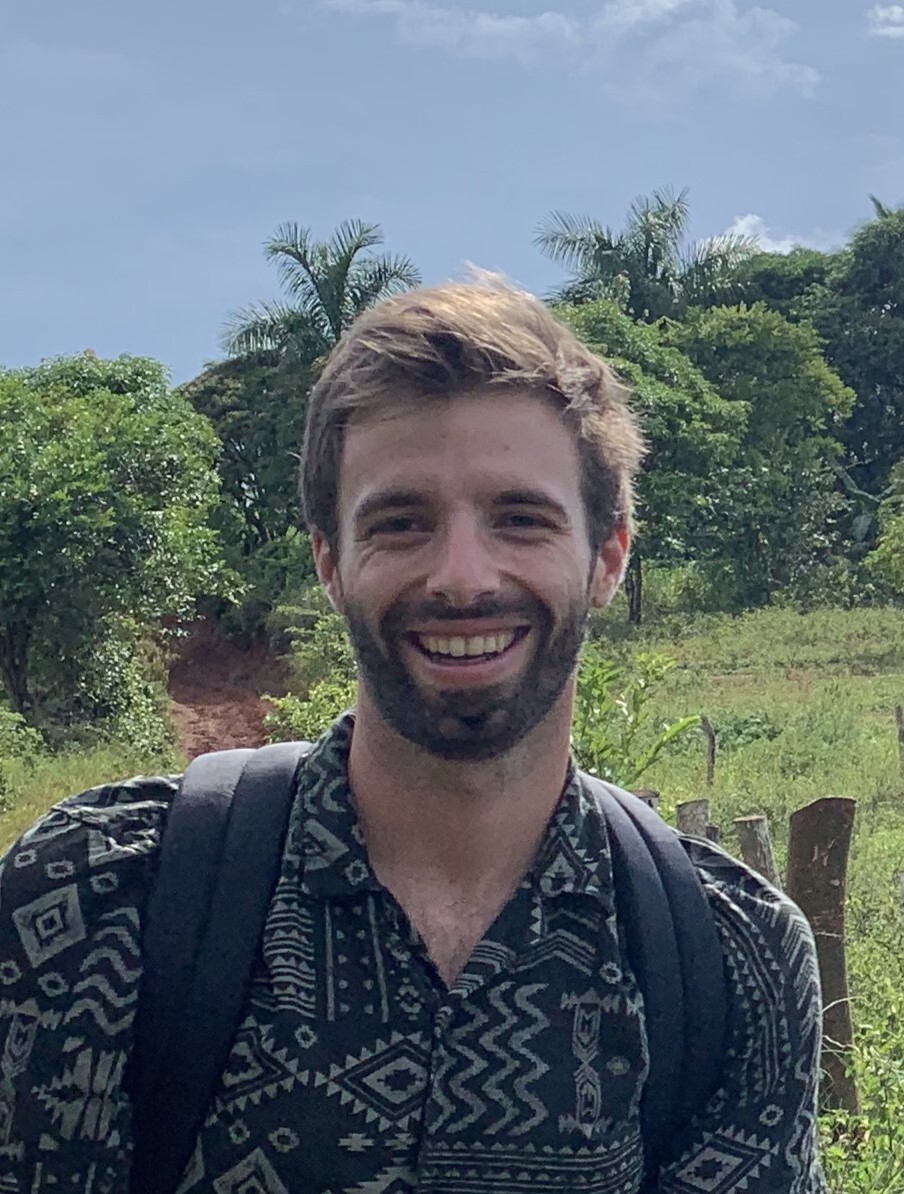
Robin Zbinden
PhD student at EPFL
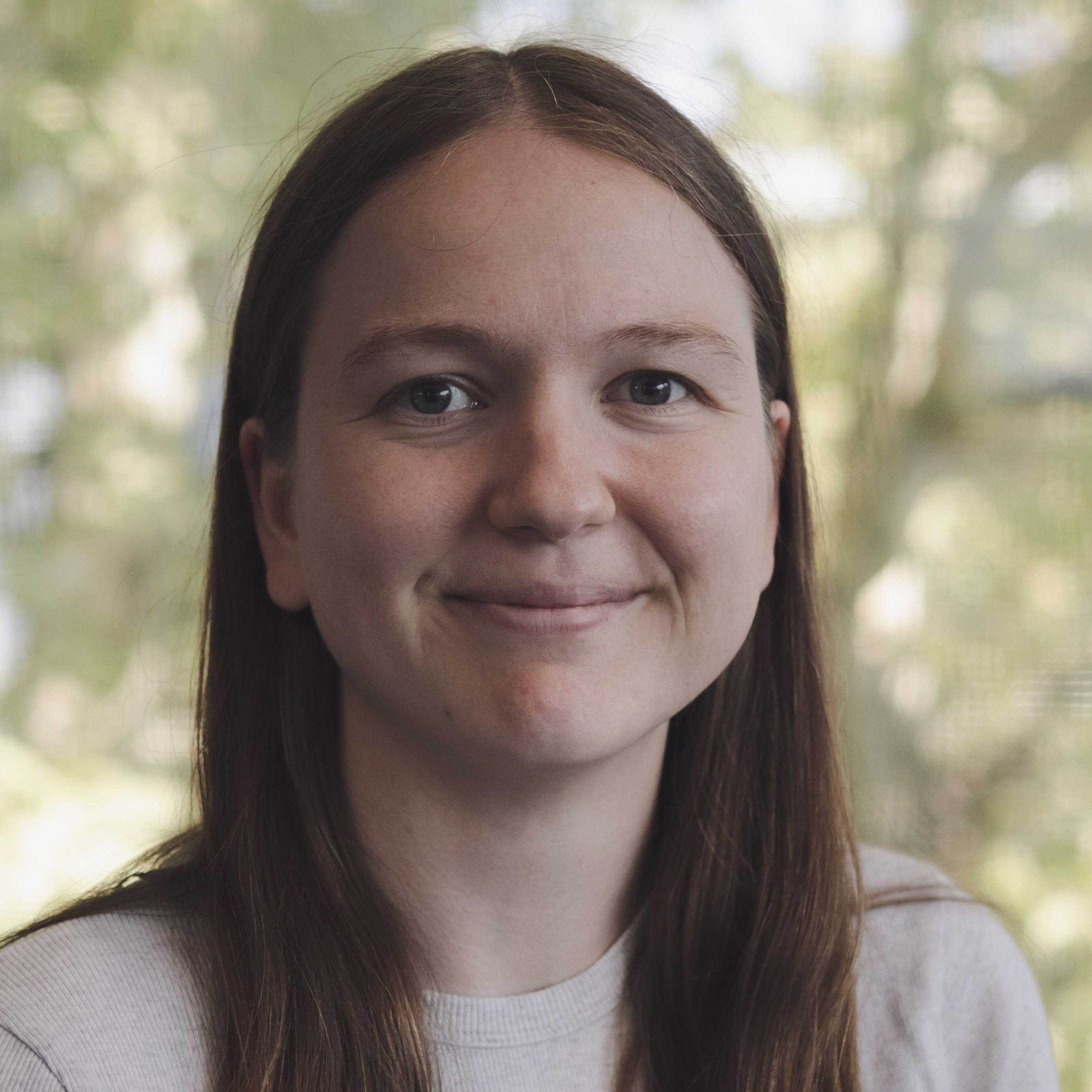
Dr. Christina Humer
Postdoctoral fellow at ETH AI Center

Dr. Fanny Lehmann
Postdoctoral fellow at ETH AI Center

Johannes Dollinger
PhD Ecovision Lab at UZH
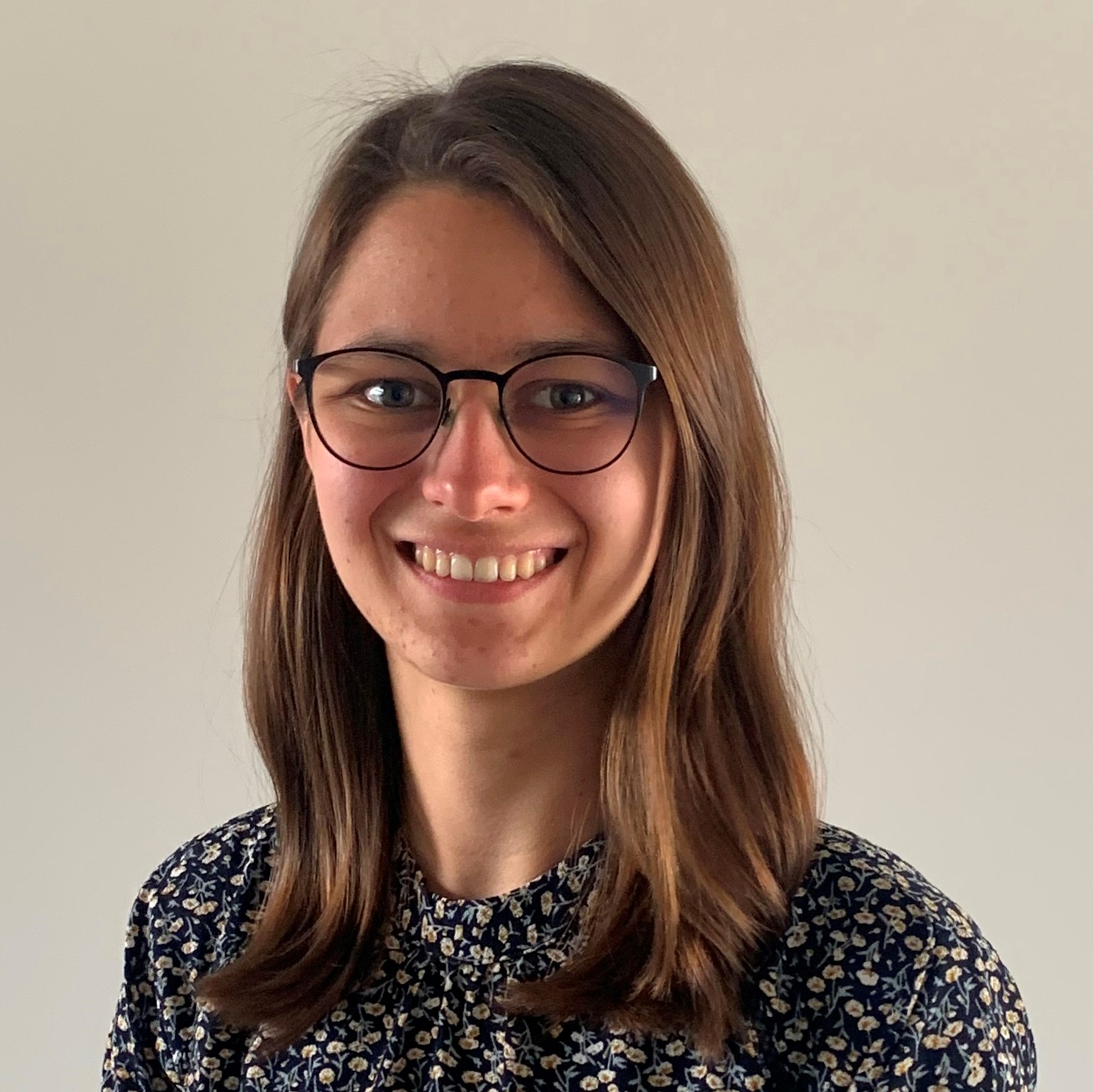
Dr. Dana Grund
PostDoc at ETH
Institute for Atmospheric and Climate Science (IAC)

Paulina Körner
Data Scientist at SDSC

Dr. Joel Oskarsson
Postdoctoral fellow at ETH AI Center
Nina van Tiel
PhD student at EPFL
Steffen Knoblauch
PostDoc at the University of Heidelberg
Dr. Huiying Zhang
PostDoc at ETH
Institute for Atmospheric and Climate Science (IAC)